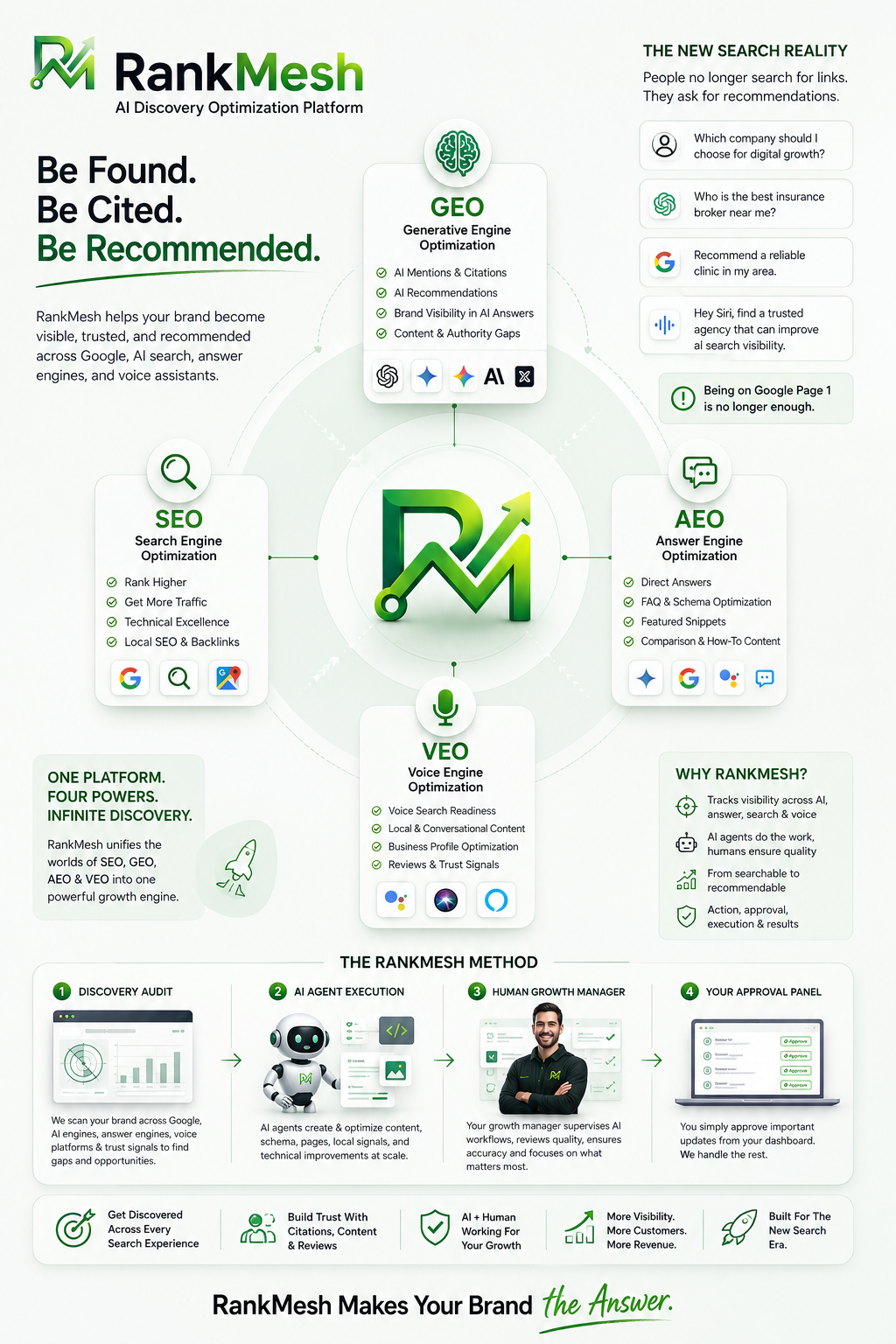
If SEO vs. GEO already made sense to you, the next layer of confusion is AEO and VEO showing up in the same sentence. They're related, they share underlying signals, and marketing decks routinely mash them together, but they target genuinely different surfaces, and conflating them means missing tactics specific to each.
SEO: search engine optimization
The baseline: ranking in traditional search results pages. Technical crawlability, backlinks, on-page keyword relevance, and Core Web Vitals are the core inputs. This is the foundation everything else builds on, not something GEO/AEO/VEO replace.
GEO: generative engine optimization
Optimizing to be cited or recommended inside a generative AI answer (ChatGPT, Claude, Perplexity, Google AI Overviews). The target isn't a ranking position; it's being one of the few names a model chooses to mention in a synthesized response. Entity consistency and structured, citable content matter more here than backlink volume.
AEO: answer engine optimization
Optimizing to win structured answer formats: featured snippets, People Also Ask boxes, and direct-answer cards. AEO predates the generative AI wave (Google's snippet and PAA features have existed for years), but the same techniques (clear Q&A formatting, FAQ schema, concise direct answers) now also help win citations inside AI Overviews and chat answers, which is why AEO and GEO overlap so much in practice.
VEO: voice engine optimization
Optimizing for how voice assistants (Siri, Alexa, Google Assistant) answer spoken queries. The key difference from text-based search is phrasing: people speak in full, conversational sentences ("what's a good plumber near me right now") rather than typed fragments ("plumber near me"). Content written to match that conversational pattern, plus accurate, structured local data, performs better here.
Where they overlap
All four pull from a shared signal set: structured data, clear factual content, consistent entity information, and third-party trust signals like reviews and citations. A page well-optimized for AEO (clean Q&A structure, FAQ schema) is usually already most of the way to being GEO-friendly too. That's why platforms tend to run these as one coordinated effort rather than four separate workstreams. The underlying work mostly overlaps, even though the target surface differs.
Why the distinction still matters
If you only track Google rankings, you'll miss that you're invisible in ChatGPT answers for the same queries. If you only optimize for AI chat citations, you might miss an easy featured snippet win that drives real click traffic today. Treating these as one undifferentiated "AI SEO" blob means under-investing in whichever surface you're not explicitly checking. See how RankMesh runs all four together on the AI SEO Platform page, or look at GEO and AEO individually for the agent-level detail.